A liquid detergent pouch packing machine can run smoothly during a short demonstration and still struggle once it reaches daily production. The reason is usually not one dramatic mechanical failure. More often, small process issues begin to accumulate: foam rises into the pouch opening, a viscous formula fills more slowly than expected, the nozzle leaves a trailing drop, or a pouch that looks stable when empty becomes difficult to control after filling.
For detergent manufacturers, contract manufacturers, OEM plants and factories expanding an existing packaging line, these details matter more than a long list of standard machine features. The equipment has to work with the actual detergent, actual pouch, required filling volume, SKU mix and production schedule.
So before comparing configurations, it helps to change the starting question. Instead of asking which machine has the highest speed, ask what conditions the machine must control every shift to keep producing saleable pouches consistently.
Start With the Detergent Before Selecting the Machine
Viscosity Changes the Filling Strategy
Liquid detergents cover a broad range of flow characteristics. A light household cleaner may move through the filling system quickly, while concentrated laundry detergent can require more force and a different dosing profile. Two products may use the same pouch and the same nominal fill volume but behave very differently once the filling cycle starts.
With low-viscosity liquids, the challenge may be fast shutoff without splashing or dripping. With a thicker formula, the issue may shift to filling time, product pressure and nozzle design. Temperature can add another variable because some detergents become noticeably thinner or thicker as production conditions change.
This is why viscosity data should be treated as a starting point rather than the whole specification. A representative product sample can reveal stringing, air retention, foam generation and settling behavior that a number on a technical sheet cannot fully describe.
TRPACK filling equipment can be configured for free-flowing liquids, foaming products and higher-viscosity materials, including applications reaching 120,000 Cps. Different filling and pressure-assisted approaches are used according to the product characteristics. For a pouch project, the useful decision is not whether a machine can theoretically cover a wide viscosity range, but which filling method gives the most stable result with the detergent that will actually enter production.
Foaming Can Become a Sealing Problem
Foam changes more than the filling cycle. When detergent enters a pouch too aggressively, bubbles can continue rising after dosing stops. That may force the line to slow down, increase cleaning frequency or allow product to reach the area needed for closing.
Submerged or bottom-up filling can reduce turbulence for suitable formulas. Servo-controlled filling can also support a more controlled profile rather than running the complete dose at one fixed speed. TRPACK applies submerged filling for applicable foaming-liquid applications and uses servo control across relevant filling equipment.
But there is an important production question behind these features: does the proposed filling profile still control foam at the output your factory actually needs? That is where sample testing becomes more valuable than discussing a feature in isolation.
Corrosive Formulas Need a Material Compatibility Review
Bleach, disinfectants and aggressive cleaning chemicals add another consideration. Stainless steel selection matters, but the material review should not stop at the main machine frame. Hoses, valves, seals, gaskets and every component exposed to the detergent should suit the formulation.
TRPACK uses SUS304 stainless steel for major machine structures and SUS316L for product-contact components. For strongly corrosive cleaning products, configurations can also include PP spray-coated frames and Teflon treatment where the application requires additional protection.
| Detergent Behavior | Typical Production Risk | What to Evaluate in the Machine |
|---|---|---|
| Free-flowing liquid | Splashing, dripping or overrun | Nozzle shutoff, dosing response and filling profile |
| Higher viscosity | Longer filling time or unstable flow | Pump selection, pressure and nozzle configuration |
| High foaming tendency | Foam reaching the pouch closing area | Submerged filling and controlled filling speed |
| Corrosive detergent | Premature wear or chemical damage | Product-contact materials, seals and protective treatment |
Running a foaming, viscous or corrosive detergent? Send TRPACK your product characteristics or sample, fill-volume range, pouch information and required output. The filling configuration can then be evaluated around your actual production conditions.Request a Customized Filling Assessment
Treat the Pouch as Part of the Filling Process
Pouch Stability Affects Filling Consistency
A flexible pouch does not behave like a rigid bottle. Film stiffness, gusset design, pouch dimensions, opening geometry and spout position can influence how the package is held and presented during filling.
This is one reason actual pouch samples become important before the final configuration is approved. A drawing can define dimensions, but it cannot always show how easily a pouch opens, whether the sides collapse around the nozzle or how the package behaves as its weight increases during filling.
If several pouch sizes will run on one line, the changeover process also needs attention. A manufacturer may technically be able to run each format, but how many adjustment points are involved? Are change parts required? Can operators repeat the setup without relying on one highly experienced technician?
These questions become especially important in factories that handle frequent production orders for different brands, fragrances or fill volumes.
Keep the Closing Area Clean Before Sealing Begins
A pouch can receive the correct amount of detergent and still fail later if foam, splashing or a trailing drop contaminates the area used for closing. This connects nozzle performance directly with pouch integrity.
That is why leakage prevention should not begin only at the sealing station. Filling speed, nozzle withdrawal, shutoff timing, pouch positioning and foam control all influence whether the closing area arrives clean.
A stable pouch process is not simply “fill first, seal later”; filling and closing have to be engineered as one continuous operation.
Before mass production, the intended pouch material and detergent should be evaluated together. Seal integrity, leakage behavior and filled-pouch handling should follow the requirements of the actual package rather than assumptions carried over from another film structure or another product.
Match the Filling Technology to the Product
Piston filling, gear-pump filling and other positive-displacement or pressure-assisted systems can each make sense under different production conditions. A procurement team does not need to decide that one technology is universally better before the formula has even been reviewed.
A piston-based system can provide controlled volumetric displacement for many viscous and semi-viscous products. A gear-pump configuration may suit applications that require controlled product transfer and match the pump’s operating characteristics. Other approaches may make more sense when cleaning, product shear, dosing range or output requirements change.
The more useful comparison is how each system behaves with the production formula. How easy is the product path to clean? How does the system respond if viscosity changes? Which wear parts require routine replacement? Can the filling profile be adjusted without creating more foam?
Answering those questions early reduces the risk of choosing a machine around a filling principle that looks suitable on paper but creates unnecessary compromises on the factory floor.
Compare Saleable Output, Not Just Nominal Speed
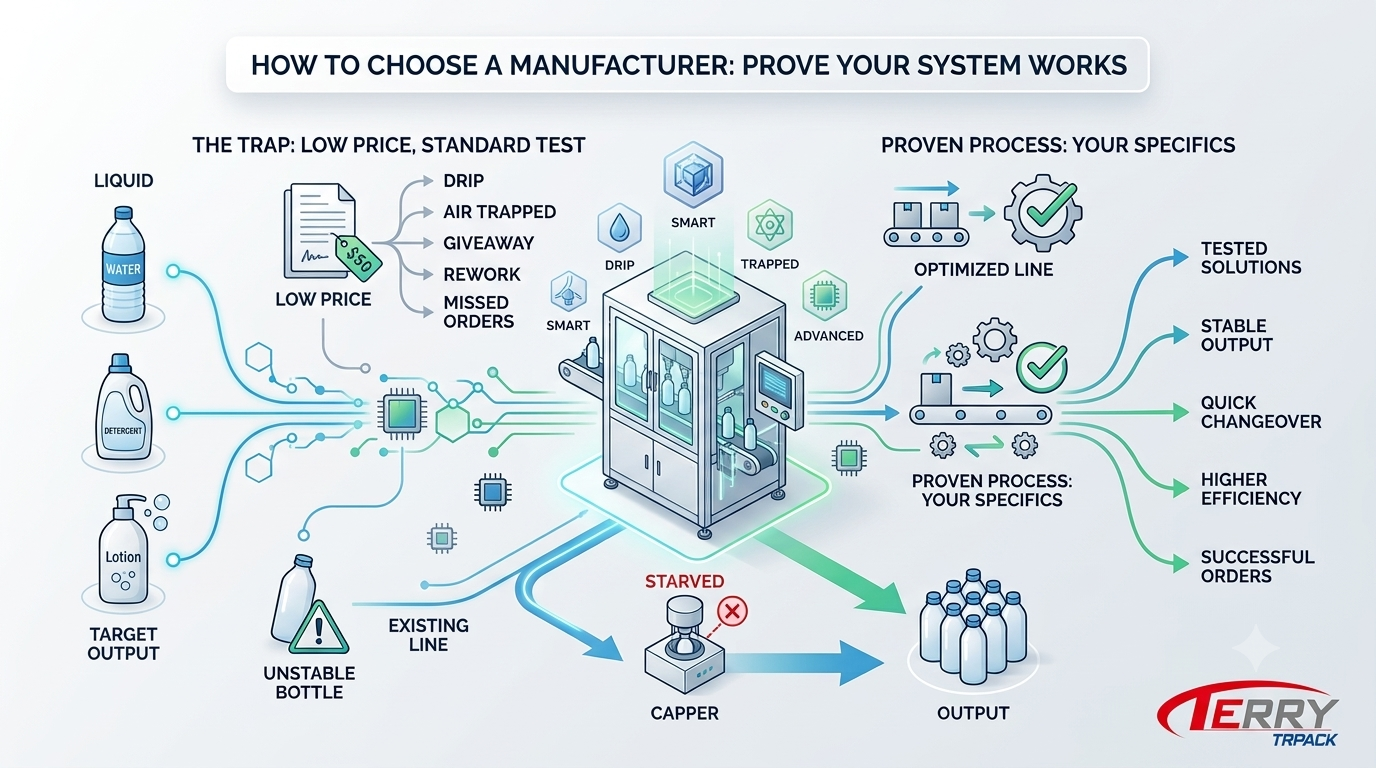
Pouches per minute is an important specification, but the figure only becomes meaningful when the test conditions are clear. Fill volume, detergent viscosity, foaming tendency, pouch dimensions and the closing process can all change the practical production rate.
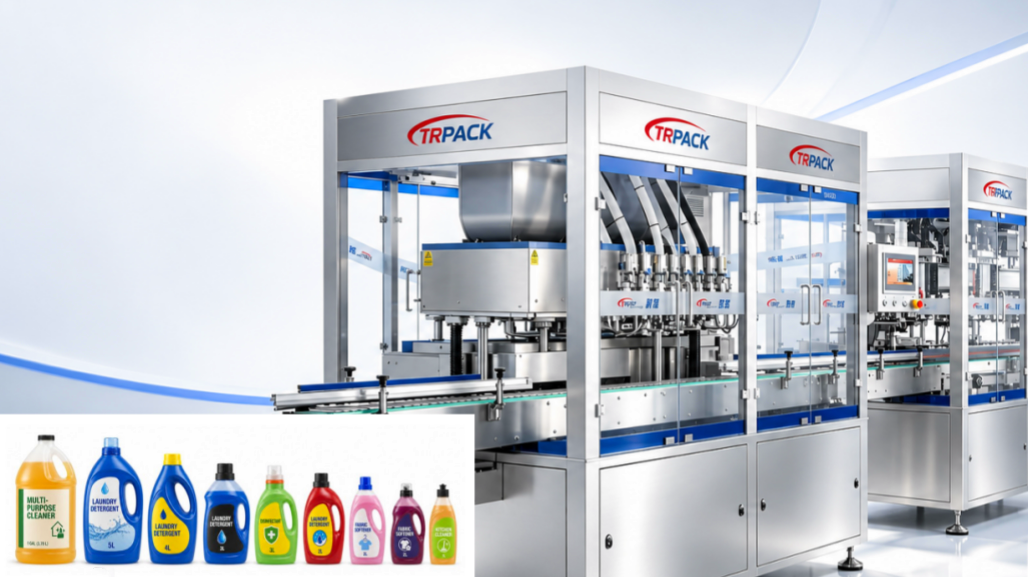
This can also be seen in other detergent packaging formats. For manufacturers filling large rigid containers, TRPACK offers a 1L-5L Large Capacity Automatic Tracking Bottle Filling Machine for Liquid Detergent Production Line. It is a bottle-filling system rather than a pouch machine, so it should not be treated as a direct pouch specification. However, it provides a useful reminder that filling capacity and machine configuration need to follow the container size, product behavior and production target rather than one universal speed figure.
That distinction matters for pouch projects as well. A line that reaches a high peak rate but repeatedly stops for foam cleanup or pouch adjustment may produce fewer acceptable packs over an eight-hour shift than a configuration running at a more controlled rate.
When comparing proposed capacities, define the operating conditions behind them. The same detergent, same pouch format and same fill volume should be used wherever possible. If two suppliers are quoting output under different conditions, the numbers are not yet a meaningful comparison.
For factories that package detergent in both flexible pouches and 1L-5L bottles, the pouch and bottle lines should be evaluated separately while keeping product supply, filling behavior and downstream automation in the same production plan.
Plan for the Next SKU, Not Only the First One
A line often looks simplest when the project team focuses on the first detergent that will run through it. Daily production becomes more complicated when another viscosity, fragrance, fill volume or pouch size arrives.
Servo-controlled settings and recipe management can make repeated production conditions easier to restore. TRPACK uses servo systems and Recipe Function settings in applicable equipment configurations, which can support parameter changes when factories produce multiple specifications.
Recipe storage does not remove every mechanical adjustment, however. Guides, nozzles, pouch-handling components or other format-related parts may still need to change. The practical question is how much work remains after a recipe is selected.
For plants with frequent short runs, changeover time can have a major effect on monthly capacity. A machine that gains several cycles per minute but loses substantial time during every SKU change may not improve overall production as much as expected.
Use Automation to Prevent Waste Before It Happens
Good automation should stop a problem before detergent and packaging material are wasted. If a package is missing, badly positioned or not ready for filling, the control strategy should prevent an unnecessary dose whenever the selected equipment configuration supports that detection point.
TRPACK automation systems use multiple sensing and detection functions to identify abnormal conditions and trigger alarms or machine stops. For a pouch application, the exact detection logic should be defined around the selected pouch-feeding and handling method rather than copied from a different machine.
This keeps the discussion focused on useful automation. The goal is not to add more sensors simply because they are available. Each detection point should reduce product loss, packaging waste, downtime or operator intervention.
Connect the Pouch Machine With the Rest of the Line
The production process does not end when detergent enters the pouch. Coding, inspection, conveying, secondary packaging and palletizing can all become bottlenecks if they are planned separately.
Factories installing a new automatic line should define equipment interfaces before manufacturing begins. Product feeding, conveyor speeds, control signals, accumulation areas and downstream capacity all influence whether the final line operates as one process.
TRPACK supplies individual filling and packaging equipment as well as integrated and turnkey automation projects covering upstream handling, filling, closing processes, cartoning, case handling and palletizing for applicable production lines.
For a liquid detergent pouch project, the exact pouch feeding, filling, sealing and downstream scope should still be confirmed during engineering. If other suppliers are responsible for individual stations, interface responsibilities should also be written into the project scope before commissioning begins.
What Does a Liquid Detergent Pouch Packing Machine Cost?
There is no useful single price for every liquid detergent pouch packing machine because the final configuration can change significantly with the product, pouch and automation scope. Filling technology, filling-head configuration, pouch handling, sealing method, corrosion-resistant materials, inspection functions, required output and downstream integration can all affect the equipment investment.
If you need current pricing, contact TRPACK with your detergent specifications, pouch samples or drawings, fill-volume range, target output and required automation scope. TRPACK can review these conditions and prepare a customized machine configuration and quotation instead of applying one standard price to very different production requirements.
The quotation should then be considered together with operating cost. Labor demand, detergent loss, rejected pouches, cleaning time, format changes, maintenance and downtime can influence the cost of running the line long after installation.
For this reason, procurement teams may find it more useful to compare expected total operating conditions rather than equipment investment alone. A customized proposal also makes it easier to separate essential functions from optional automation and decide which configuration fits the project’s production and budget requirements.
Need a machine configuration and current project pricing? Send TRPACK your detergent type, pouch format, fill volume, capacity target and line requirements. A customized technical and commercial proposal can be prepared around the application.Contact TRPACK for a Customized Quote
Define FAT Conditions Before the Equipment Is Built
Factory acceptance testing becomes much more useful when the expected result is agreed before machine manufacturing is complete. Broad descriptions such as “stable running” leave too much room for different interpretations.
For a detergent pouch project, the test plan can define the product or representative test material, pouch format, filling volume, operating period, acceptable fill performance, foam and drip observations, alarm response and required changeover procedure.
The equipment supplier and manufacturer can then evaluate the same conditions instead of discussing performance only after a problem appears.
TRPACK applies machine assembly testing and finished-product testing as part of its manufacturing process and supports FAT before shipment. For customized projects, the project-specific acceptance conditions should still be agreed with the customer in advance.
Prepare Better Information Before Requesting a Quote
A request that only says “We need a liquid detergent pouch packing machine” leaves many important variables unanswered. Supplying better information at the beginning allows the technical discussion to move faster and reduces assumptions in the proposed configuration.
- Detergent type and formulation characteristics.
- Viscosity and representative product sample where available.
- Foaming tendency and any corrosion concerns.
- Target fill volume and required filling range.
- Actual pouch samples, dimensions and film structure.
- Pouch opening, spout or closing requirements.
- Required production output and daily shift pattern.
- Number of SKUs and expected changeover frequency.
- Available factory space and intended line layout.
- Required coding, inspection, conveying and downstream packaging.
This information also makes customization more practical. Instead of adding optional functions one by one after the project starts, the filling system, pouch handling, materials and automation level can be planned around the same production objective.
Turn Production Requirements Into a Customized Solution
The most useful equipment discussion starts with the production conditions rather than a standard machine model. Define the detergent, pouch, filling volume, output target, SKU plan and integration requirements first. Those inputs determine which filling method, materials, controls and automation functions deserve to be included.
If your project is still at the planning stage, prepare a detergent sample or material specification together with actual pouch samples where possible. Add the required fill-volume range, expected output, available factory space and any upstream or downstream processes that need to connect with the new equipment.
TRPACK can use these details to evaluate a customized filling and packaging configuration. If pricing is required, contact TRPACK after providing the project information so the quotation reflects the actual pouch, product and automation requirements rather than a generic equipment price.
Discuss Your Liquid Detergent Packaging Project
Send your detergent characteristics or sample, pouch specifications, fill-volume range, target output and line-layout requirements. TRPACK can review the application and prepare a customized equipment proposal and quotation for your production conditions.Request Your Customized Solution
Frequently Asked Questions About Liquid Detergent Pouch Packing Machines
Can one machine fill detergents with different viscosities?
It may be possible when the filling system, dosing range and control parameters cover the required products. Different formulations should still be evaluated because viscosity, foaming behavior and cleaning requirements can change the practical operating range.
How should a highly foaming detergent be filled?
Controlled filling speed and submerged or bottom-up filling can help reduce turbulence for suitable products. The final filling profile should be tested with the actual detergent and pouch because foam behavior changes with formula, fill volume and production speed.
Can the same machine run several pouch sizes?
That depends on the dimensional range and pouch-handling design. In addition to confirming that each pouch fits, ask what operators need to adjust or replace and how long a repeatable changeover takes.
Why can the actual output be lower than the quoted machine speed?
Viscosity, fill volume, foam control, pouch positioning, closing time, rejects, cleaning and changeovers can all reduce practical output. Capacity should therefore be discussed under defined product and packaging conditions.
Can TRPACK customize a liquid detergent pouch packing solution?
Yes. The configuration can be evaluated around the detergent characteristics, fill volume, pouch format, target capacity, corrosion requirements and required upstream or downstream automation. Providing samples and production data helps define the customized scope more accurately.
How much does a customized liquid detergent pouch packing machine cost?
Pricing depends on the final machine configuration and automation scope. Contact TRPACK with your detergent information, pouch specifications, filling range and required output to receive a customized solution and quotation based on the actual project.
What if our factory also fills detergent into 1L-5L bottles?
Pouch and bottle packaging should be evaluated as separate container-handling processes, while product supply and downstream automation can be considered together. TRPACK’s 1L-5L Large Capacity Automatic Tracking Bottle Filling Machine for Liquid Detergent Production Line can be referenced when large-format bottle filling is also part of the project.